
AI debt collection is the use of artificial intelligence — most visibly voice agents that make and answer phone calls — to automate payment reminders, overdue-invoice follow-ups and payment arrangements. In Europe, the problem it tackles is enormous: businesses receive 11% of their revenue late every year and spend 73 working days annually chasing overdue invoices (Intrum European Payment Report 2025). This guide explains how AI voice agents work in collections, what the data says about recovery rates, and why the technology can protect — rather than damage — the customer relationships your repeat business depends on.
Why late payments are a customer-relationship problem
Most overdue invoices aren’t disputes or defaults. They’re forgotten emails, misplaced invoices, or short-term cash-flow timing. A European Commission impact assessment found that late payment affects around 60% of B2B transactions in the EU (European Parliament, Late Payments Directive revision).
That creates an awkward tension for operational businesses — garages, logistics firms, property services, trades. The person who owes you money is usually also a customer you want back next month. Chase too hard and you win the invoice but lose the relationship. The stakes are real: 72% of customers say they would switch brands after a single negative experience (Qualtrics), and acquiring a new customer costs 6-7x more than retaining an existing one (Zippia).
What is an AI debt collection agent?
An AI debt collection agent is software that holds natural spoken conversations about payments — it calls (or answers calls from) customers with overdue invoices, reminds them of the amount due, answers questions, takes promises to pay, and routes complex cases to a human.
Modern voice agents differ from the robocalls of the past in three ways:
- They converse, not broadcast. The customer can interrupt, ask “which invoice is this?”, or explain their situation — and get a sensible answer.
- They connect to your systems. The agent sees the invoice, the customer history and earlier reminders, so the conversation is accurate and personal.
- They know their limits. Disputes, hardship cases and irate customers are escalated to a human immediately.
Does AI actually improve collection rates?
The evidence says yes — meaningfully, though not magically. McKinsey estimates that organisations deploying generative AI in collections and customer assistance can improve recoveries by about 10% while cutting operating costs by up to 40%, with customer-satisfaction scores in collections rising by up to 30% (McKinsey).
The main mechanisms are simple:
- Speed. An AI agent calls on day one of an invoice going overdue, not when someone in the office gets around to it.
- Coverage. It reaches every overdue account, every time — including small invoices human teams never get to.
- Persistence without friction. Polite, consistent follow-up at the right intervals, with no awkwardness and no lost tempers.
- Instant resolution. Payment links, payment plans or a promise to pay captured in the same call.
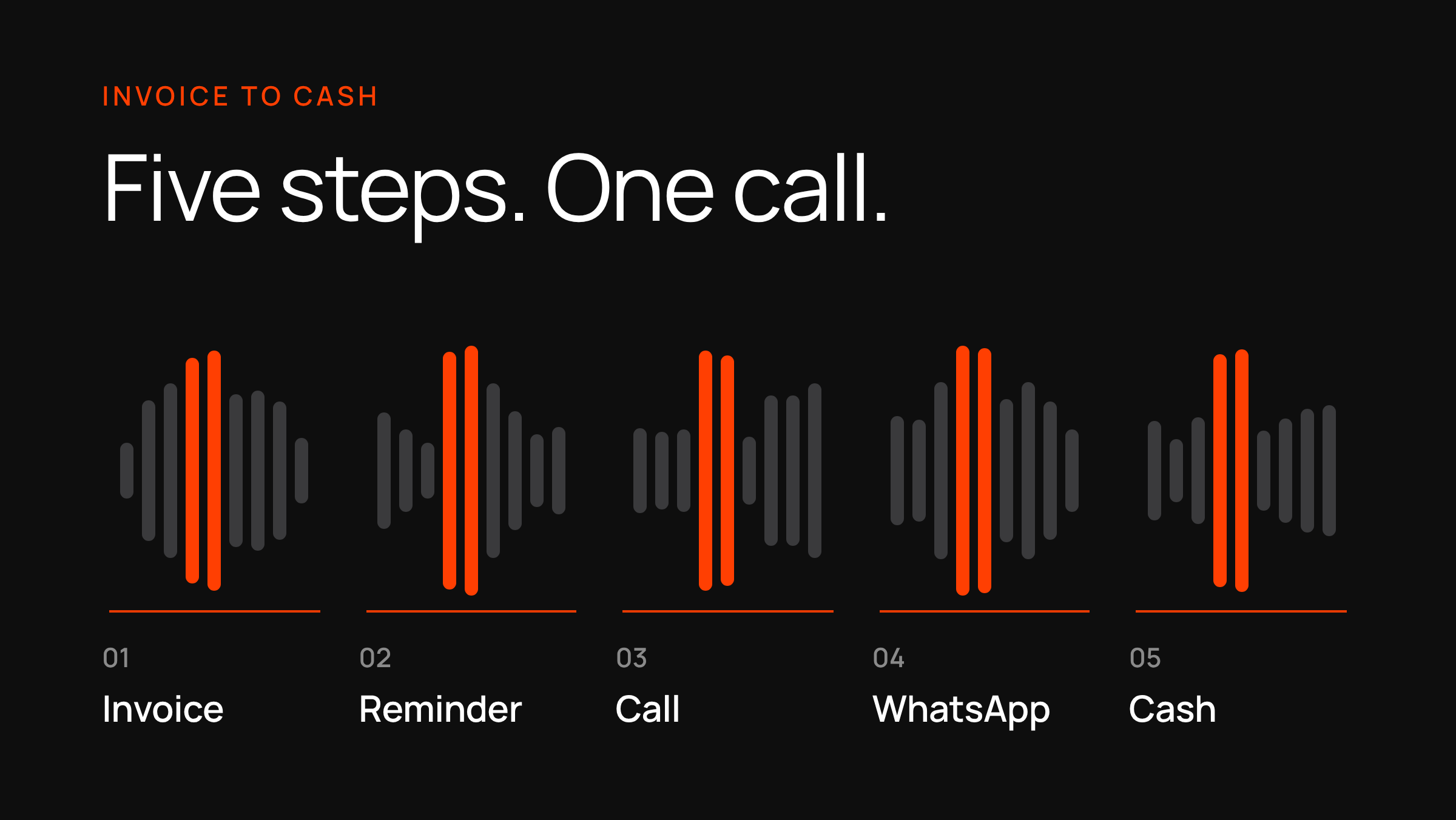
Automating the reminder workflow alone has been shown to improve collection outcomes by 20-30% for many businesses (Chaser).
How does voice AI protect the customer relationship?
This is the counterintuitive part: automated calls done well are often less damaging to relationships than manual collections. McKinsey found 74% of consumers prefer digital-first interactions over traditional collection calls, and customers contacted through preferred channels are more likely to pay in full (McKinsey).
An AI agent never has a bad day — tone, script discipline and regulatory wording are consistent on the ten-thousandth call. Empathy-first collection programmes have been associated with a 30% reduction in voluntary churn in telecom portfolios (Symend). It also removes the social awkwardness on your side: in owner-led businesses, chasing a good customer for money is the call everyone postpones. For a closer look at how the underlying technology handles a single call end to end, see how AI voice agents run collection calls.
What about compliance and tone?
Collections is a regulated activity across Europe, and voice AI has to be configured accordingly. In practice that means: identifying the caller and purpose clearly, respecting contact-time rules, applying the correct late-payment interest and the EU’s €40 flat compensation for B2B late payments under the Late Payment Directive, honouring do-not-call requests, and escalating disputes to humans. A well-built agent applies these rules more consistently than a busy human team — every call is logged, transcribed and auditable.
How to get started without risking your customer base
Start where the risk is lowest and the volume is highest: friendly first reminders on recently overdue invoices. Measure days-sales-outstanding, promise-to-pay rates and — critically — repeat-purchase behaviour of contacted customers. Keep humans on disputes and sensitive accounts, and expand to later-stage follow-ups only once the data shows customers respond well.
If your team spends hours each week chasing invoices by phone — or avoids those calls entirely — a voice AI agent like Sono can handle the routine reminders politely, in your brand’s tone, and hand anything delicate straight to your people.