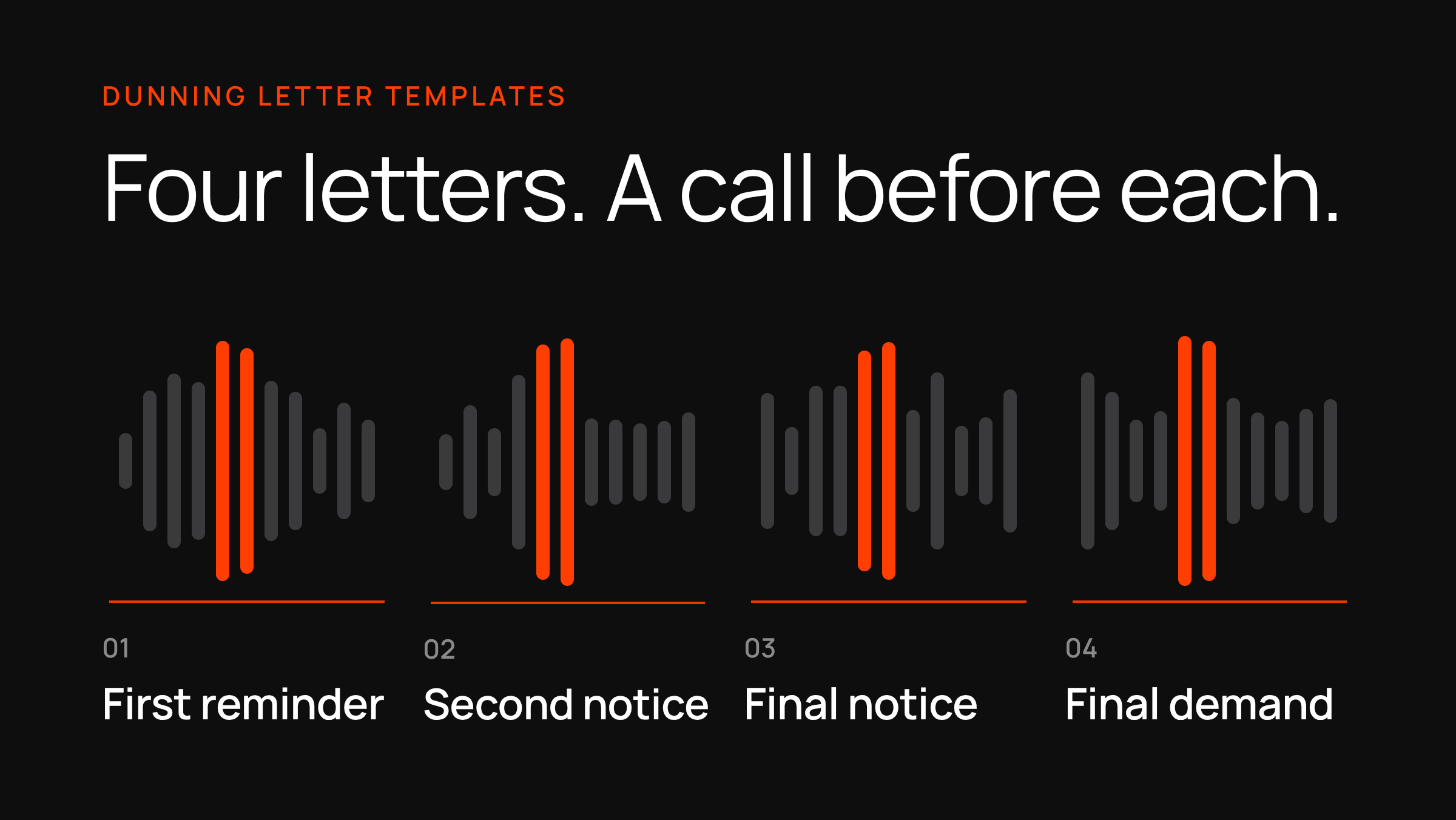
A dunning letter is a written request a business sends to a customer whose invoice is overdue, asking for payment by a set date. Most businesses send three or four, each firmer than the last. Below are copy-and-paste templates for each stage, the call to make before each letter, and a WhatsApp version that carries the payment link.
These templates are written for the business that sent the invoice. If you received a dunning letter yourself, contact the sender directly to agree on a date or raise a dispute.
What is a dunning letter?
A dunning letter is one step in the dunning sequence: the written reminders, calls and notices a business uses before it hands an invoice to collections. The word comes from “dun”, an old verb meaning to demand payment. In the US you will also see it called a collection letter, a past due notice or a demand for payment.
The need is real. In the Atradius Payment Practices Barometer for the US (survey run mid-2024), half of all B2B invoices were overdue and bad debts averaged 8% of B2B credit sales.
A letter alone rarely settles an overdue invoice. It is the written record. The conversation that gets a payment date usually happens on the phone, which is why each template below starts with a call.
What are the four stages of a dunning letter?
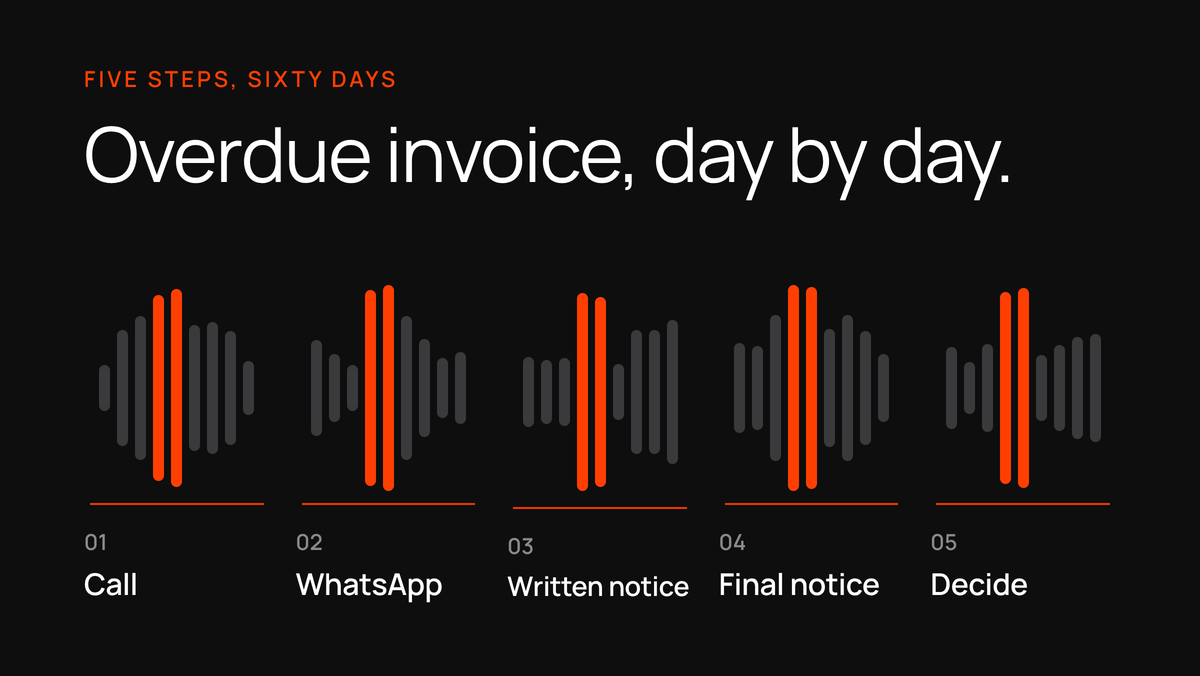
Most sequences use four letters. The days below are an example, so adjust them to your payment terms.
| Stage | Example timing | Call before the letter | Letter tone | What the letter adds |
|---|---|---|---|---|
| 1. First reminder | About 7 days past due | Short check: “did the invoice arrive?” | Friendly | Invoice copy and payment link |
| 2. Second notice | 14 to 21 days past due | Ask for a payment date | Direct | Confirms the date agreed on the call, or asks for one |
| 3. Final notice | About 30 days past due | Call a decision maker | Firm | A last date and the next step your terms allow |
| 4. Final demand | About 45 days past due | Last call to offer a payment plan | Formal | Notice that the account goes to collections or legal on a named date |
Timing matters more than wording. In Sono’s collection data, calls made on day 3 past due recovered 1.94 times more than calls made on day 65 (see what a collection call is worth). So start the sequence early and keep the gaps short.
What should a dunning letter include?
Every letter in the sequence needs the same core facts, so the customer can pay without searching for anything.
| Element | Why it matters |
|---|---|
| Invoice number, date and amount | The customer’s accounts payable team matches payments by invoice number |
| Original due date and days past due | Shows how long the invoice has been open |
| How to pay, with a direct link | Removes the most common excuse for a delay |
| A specific date to pay by | “As soon as possible” gets no date in anyone’s calendar |
| A named contact and a direct phone number | Disputes reach a person instead of a shared inbox |
| What happens next, if anything | Only consequences your contract or invoice terms allow |
| Reference to earlier contact | “As agreed on our call on November 12” keeps the record straight |
Keep each letter under 200 words. Put the amount and the invoice number in the subject line or the first sentence.
What do you say on the call before each letter?
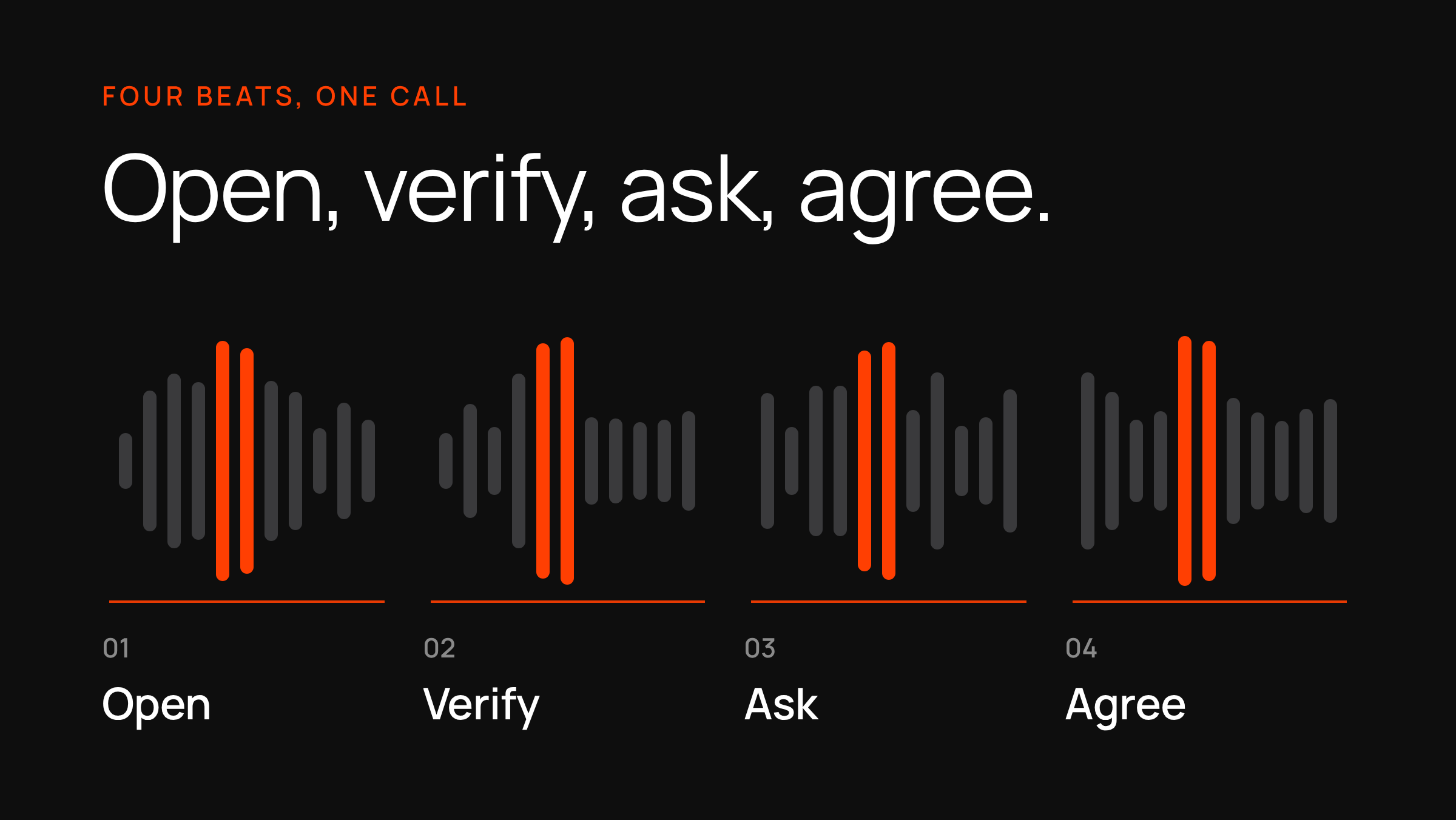
Call first, then send the letter as the written follow-up. A 60-second call tells you whether the customer forgot, is waiting on an approval, disputes the invoice or cannot pay yet. Each of those needs a different letter.
You: Hi, this is Dana from Harbor Point Electrical. Is this Mr. Chen?
Customer: Yes, speaking.
You: I’m calling about invoice 4471 for $3,860, which was due on November 3. It’s still open on our side. Is anything holding it up?
Customer: It’s waiting for sign-off from our project manager.
You: Understood. Can we expect payment by Friday, November 20? I’ll send you the invoice and a payment link by WhatsApp right after this call.
Customer: Friday should work.
You: Great, I’ll note Friday the 20th. Thanks for your time.
If the customer disputes the invoice, stop the letters for that invoice and pass it to whoever owns the dispute. For more call wording, including voicemail and objections, see the collection call script.
First dunning letter template: friendly reminder
Send it about a week after the due date, after a short call or a voicemail.
Subject: Invoice 4471 ($3,860), due November 3
Dear Mr. Chen,
Our records show that invoice 4471 for $3,860, due on November 3, is still open. It may have crossed with your payment, in which case thank you and please ignore this letter.
If not, you can pay online here: [payment link]. A copy of the invoice is attached.
If anything is holding up payment, call me directly at 555-0187 and we will sort it out.
Kind regards, Dana Ruiz, Accounts Receivable, Harbor Point Electrical
Send this by WhatsApp or text straight after the call:
Hi Mr. Chen, thanks for taking my call. Here is invoice 4471 ($3,860) and the payment link: [link]. Dana, Harbor Point Electrical
Second dunning letter template: second notice
Send it at 14 to 21 days past due. Confirm the date from your call, or ask for one if the customer did not answer.
Subject: Second notice: invoice 4471 ($3,860), 21 days past due
Dear Mr. Chen,
Invoice 4471 for $3,860 is now 21 days past due. On our call on November 12 you mentioned payment was waiting for project sign-off, and we noted November 20 as the payment date. We have not yet received it.
Please pay by December 1 using this link: [payment link], or reply with the date we can expect payment.
If there is a problem with the invoice itself, tell me now so we can resolve it before the next step.
Kind regards, Dana Ruiz, 555-0187
The WhatsApp or text version:
Hi Mr. Chen, invoice 4471 ($3,860) is still open after the date we agreed. Can you confirm payment by Dec 1? Link: [link]. Dana, Harbor Point Electrical
Final notice template: before collections
Send it at about 30 days past due, after you have tried to reach someone who can approve payment. This is the letter where tone matters most. Be firm and factual, and never threaten a step you will not take.
Subject: Final notice: invoice 4471 ($3,860), 30 days past due
Dear Mr. Chen,
Invoice 4471 for $3,860 is now 30 days past due. We have contacted you by phone on November 12 and 24 and by letter on November 12 and 24, and payment has not been received.
Please pay the full amount by December 10 using this link: [payment link]. If you cannot pay in full, call me before that date and we can agree on a payment plan.
If payment has not arrived by December 10, we will take the next step in our terms of sale: [late fee / credit hold / referral to collections].
Sincerely, Dana Ruiz, Accounts Receivable Manager, Harbor Point Electrical, 555-0187
The WhatsApp or text version:
Hi Mr. Chen, final notice for invoice 4471 ($3,860), now 30 days past due. Please pay by Dec 10 or call me at 555-0187 to agree on a plan: [link]. Dana
Final demand template: notice of referral to collections
Send it at about 45 days past due, only if you will actually refer the account. It is the last letter your own business sends.
Subject: Final demand: invoice 4471 ($3,860) will be referred on December 24
Dear Mr. Chen,
Despite our calls and letters, invoice 4471 for $3,860 remains unpaid 45 days after its due date.
Unless we receive full payment or agree on a written payment plan by December 24, we will refer the account to [agency name / our attorney]. From then on, they will contact you about the debt.
You can still pay today here: [payment link], or call me at 555-0187.
Sincerely, Dana Ruiz, Accounts Receivable Manager, Harbor Point Electrical
Before you send it, check that the amount is correct, the invoice is not disputed, and every earlier contact is on file. Agencies ask for that history.
Which channel does what: letter, call, WhatsApp, text or email?
Each channel does one job well. A strong sequence uses them together rather than picking one.
| Channel | Best for | Gets a payment date? | Carries a payment link? | Written record? |
|---|---|---|---|---|
| Phone call | Finding out why the invoice is unpaid and agreeing a date | Yes, on the spot | No | Only if you log it |
| Sending the invoice and link right after the call; quick replies | Sometimes, by reply | Yes | Yes | |
| Text (SMS) | Short reminders where WhatsApp is not used | Rarely | Yes | Yes |
| The formal letter, with the invoice attached | Rarely | Yes | Yes |
For a channel-by-channel comparison with response data, see reminder call vs SMS vs email.
What US rules apply to a dunning letter?
For most businesses chasing their own invoices, the rules are light, but there are a few lines you should not cross. This is general information, not legal advice, so have a lawyer review your final notice and your terms of sale.
Letters from your own business
The FTC says creditors collecting their own debts generally fall outside the Fair Debt Collection Practices Act (FDCPA). Their collection activity is still covered by Section 5 of the FTC Act, which bans deceptive or unfair practices (FTC business guidance). The same guidance warns that a creditor who uses a name suggesting a third party is collecting becomes a debt collector under the FDCPA. So sign every letter with your own company name.
After you hand the account to an agency
Once a third-party agency collects a consumer debt, Regulation F applies to the agency. It must give the consumer a validation notice in its first contact or within five days of it. The notice lists the debt and the consumer’s right to dispute it, and the dispute window runs until 30 days after the consumer receives it (12 CFR 1006.34). Your final demand should not mimic that notice, because it comes from you, not from an agency.
Late fees
Charge them only if your contract or invoice terms set them out in advance, and check your state’s rules.
Automated calls between letters
If an AI voice agent makes the calls between letters, the FCC ruled in 2024 that AI-generated voices count as “artificial” under the Telephone Consumer Protection Act (FCC). Get consent for mobile numbers and ask counsel how your use case is classified.
How do you automate dunning letters without losing the call?
Letters are easy to automate. Most accounting and accounts receivable software can send the four templates above on a schedule. The call is the step that usually gets skipped, because dialing a long overdue list takes hours.
That is the step Sono automates. Our AI voice agent calls each overdue customer before the next letter goes out. It confirms who it is speaking to, records the promised payment date and sends the invoice link by WhatsApp. Disputes and payment-plan requests go to your team. The letter that follows then confirms an agreed date instead of chasing silence. See how AI payment reminder calls work, read the full dunning process guide, or copy the friendlier first-touch wording from our payment reminder templates.