CCD2 is the EU’s revised Consumer Credit Directive, Directive (EU) 2023/2225, which replaced the 2008 directive and applies in every member state from 20 November 2026. For collections, it turns good practice into law: consumer lenders must show reasonable forbearance before enforcement, spot financial difficulty early and point struggling customers to debt advice. This guide covers what changes when a customer falls behind, who carries the duty, and what to check before an AI voice agent makes those calls.
Most CCD2 coverage so far is about credit checks and buy-now-pay-later at checkout. The collections side gets less attention, yet it changes daily work for every lender, agency and debt buyer calling consumers in arrears.
What is CCD2 and when does it apply?
CCD2 sets the EU rules for consumer credit, from advertising and credit checks to what happens when payments are missed. It entered into force on 19 November 2023, had to be written into national law by 20 November 2025 and applies from 20 November 2026 (European Commission).
Because it is a directive, you follow your country’s implementing law, not the directive itself. Finland, Sweden and Denmark all apply their new rules from 20 November 2026. Finland went further: its Consumer Protection Act has required lenders to offer reasonable payment arrangements in arrears since 26 April 2025 (Act 165/2025, Finlex). The Netherlands is behind: lawyers at Loyens & Loeff expect its implementation act to be published no earlier than 17 December 2026.
The scope is also wider than before. Interest-free and fee-free credit, including many buy-now-pay-later products, now falls under the same rules, so BNPL arrears are handled like any other consumer loan.
What does CCD2 require when a customer falls behind?
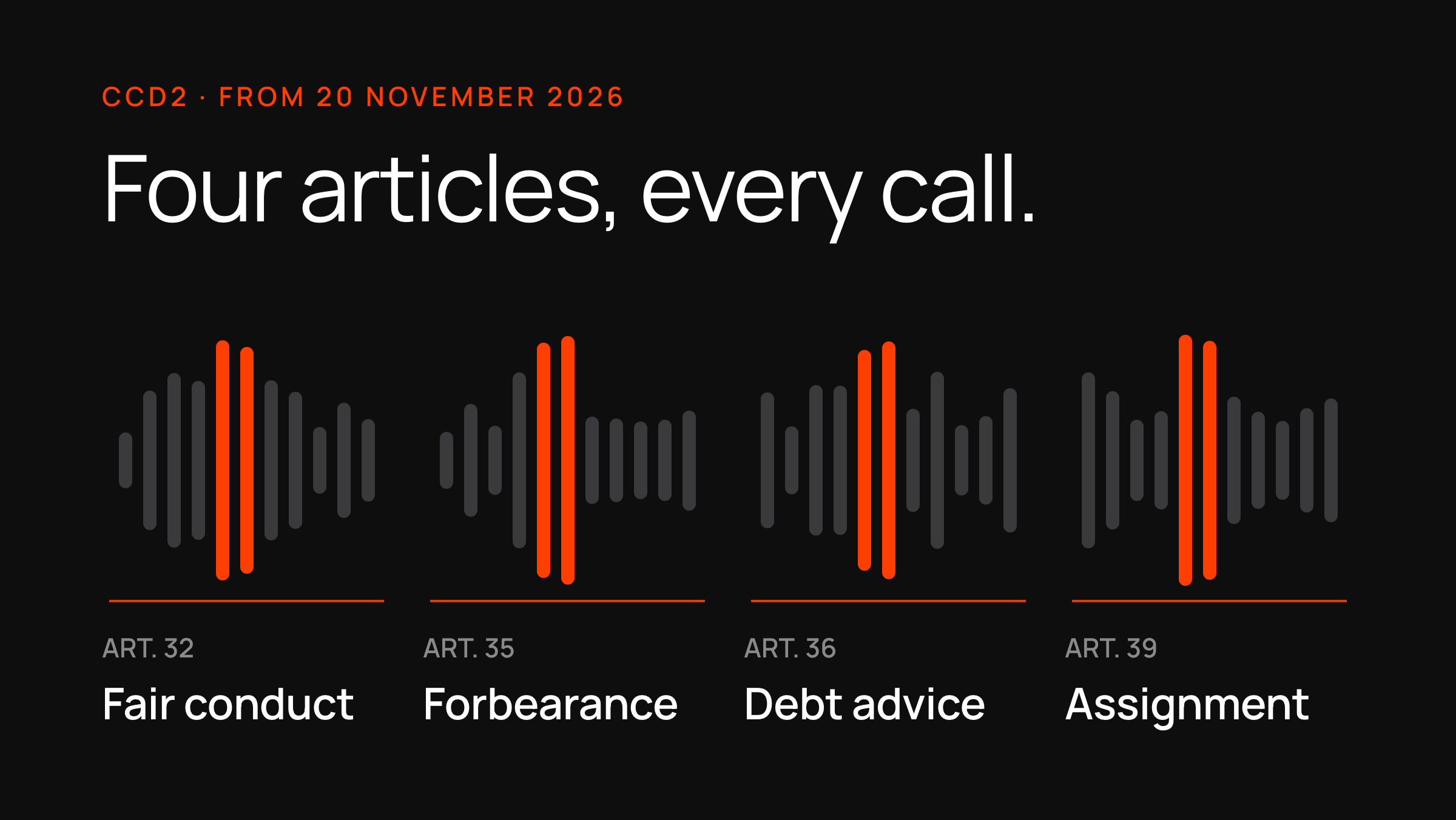
Four articles shape a collection call. None of them tells you to stop collecting. They tell you how.
- Article 32, fair conduct. Lenders must act honestly, fairly, transparently and professionally, taking account of the consumer’s rights and interests.
- Article 35, arrears and forbearance. Lenders need policies to exercise reasonable forbearance, where appropriate, before enforcement starts. The consumer’s individual circumstances must be taken into account. Forbearance can mean extending the term, deferring payments, changing the rate or refinancing.
- Article 36, early detection and debt advice. Lenders need processes to detect consumers in financial difficulty early, and must refer them to debt advisory services that are easy to reach.
- Article 39, assignment. If the debt is sold or assigned, the consumer can raise every defense against the new owner that they had against the original lender.
The recitals add two useful points. Lenders are expected to deal with emerging credit risk at an early stage. And when forbearance is appropriate, a new creditworthiness assessment isn’t required, so an affordable payment plan can be agreed without re-running a credit check.
Does CCD2 apply to debt collection agencies and debt buyers?
The duties sit with the creditor. An agency calling on a lender’s behalf carries out that lender’s forbearance and escalation policy, so the lender needs to see that the agency’s calls follow it.
Debt buyers are closer to the line. Article 39 protects the consumer’s defenses after a sale, and some national laws go further. Sweden’s new Konsumentkreditlag (2026:1011) defines a creditor as whoever grants the credit or takes over the original creditor’s claim, so a buyer of Swedish consumer loans carries the same duties as the lender.
National collection laws still apply on top. Finland’s Debt Collection Act, Sweden’s Inkassolagen and Denmark’s inkassolov keep their own rules on fees, wording and good collection practice.
How does CCD2 change payment reminders and early arrears?
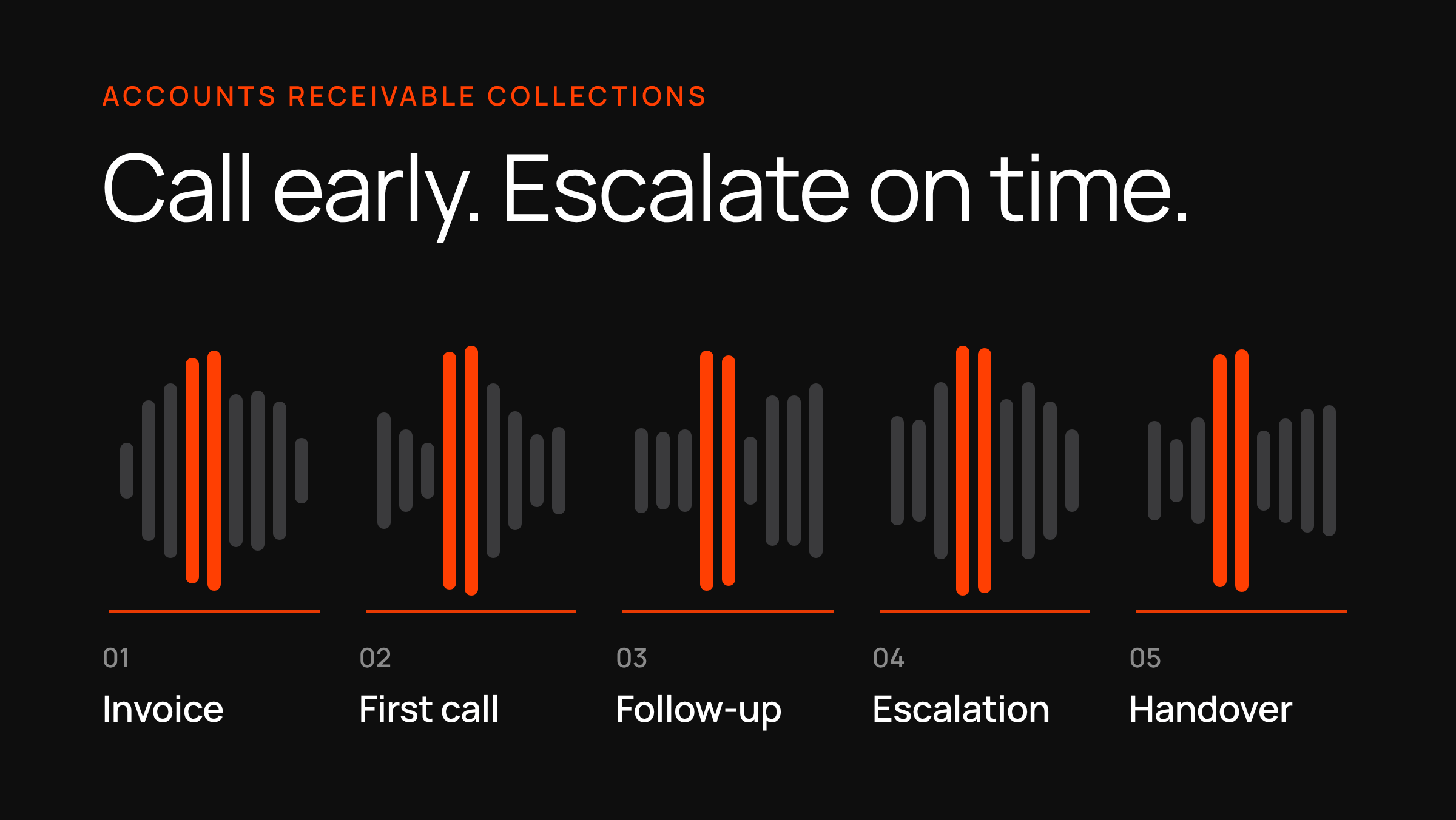
Early arrears is where Article 36 bites. A lender can’t detect financial difficulty early if the first real conversation happens at day 60, when the account is handed to collections.
Timing also changes the economics. In Sono’s 2026 European consumer-credit calling program, calls at 3 days past due produced a payment arrangement 32.5% of the time, against 11.7% at 65 days past due, at less than half the cost per arrangement (Sono call data, 2026). An early call is both the compliant move and the cheaper one.
In practice, the reminder window now needs three things it often lacked:
- A real conversation, not only a letter. A call (or a WhatsApp or SMS reply) is where difficulty shows up.
- An affordability question before any plan. A date the customer can’t keep is not forbearance.
- A path to help. Customers in difficulty go to a person and are told where to find free debt advice.
For BNPL providers, all of this is new from 20 November 2026. For utilities, telecoms and landlords, CCD2 doesn’t apply directly, but the same standard keeps you inside national collection rules.
Can AI voice agents handle collection calls under CCD2?
Yes, and they can do it more consistently than a human desk, because every call follows the same configured rules. But the rules have to exist first. CCD2 doesn’t mention AI, so the questions come from the AI Act and from how you set up the agent.
Three things to get right:
- Disclosure. Under the EU AI Act, people must be told when they are talking to an AI. The agent should say so in its first sentence, along with who is calling and for which creditor.
- Affordability, not credit scoring. AI used to evaluate creditworthiness or set a credit score is a high-risk use under the AI Act, with those obligations applying from 2 December 2027 after the Digital Omnibus (Orrick, 2026). An affordability check that sets repayment terms inside a mandate the lender defines is a different job. Keep it that way, and send any refinancing or new-credit decision to a person.
- Escalation and records. Vulnerability signals such as illness, bereavement, job loss, confusion or a third party speaking for the customer should pause collection pressure and route the account to a person. Every call should leave a recording, a transcript and a structured outcome, which is the evidence trail national supervisors will ask for. Article 44 requires penalties that are effective, proportionate and dissuasive.
Done this way, an AI agent can reach every account at day 3 instead of the share a team has hours for, which is exactly what early detection needs.
A CCD2 checklist for collection calls
Use this to review your scripts, whether people or AI make the calls.
- The caller states who they are, which creditor they are calling for and, for AI, that it is an AI.
- The balance and due date are correct and confirmed.
- Before any plan, the caller asks the affordability questions your policy defines.
- Only forbearance options in your written policy are offered, and the choice is logged with the reason.
- Signs of financial difficulty or vulnerability pause pressure and trigger handover to a person.
- Customers in difficulty are told where to get free, independent debt advice in their country.
- Disputes, including disputes about a sold or assigned debt, go to staff.
- Agreed dates and plans are confirmed in writing by SMS, WhatsApp or email.
- Every call is recorded, transcribed and scored against the rulebook.
If your team can’t call every account in arrears early enough to meet that list, Sono’s AI collection calls do it on every account, every cycle, with forbearance and escalation set by your policy. For the earlier window, see payment reminder calls.
CCD2 asks for more care, not less collecting. Lenders who call early and listen will recover more.